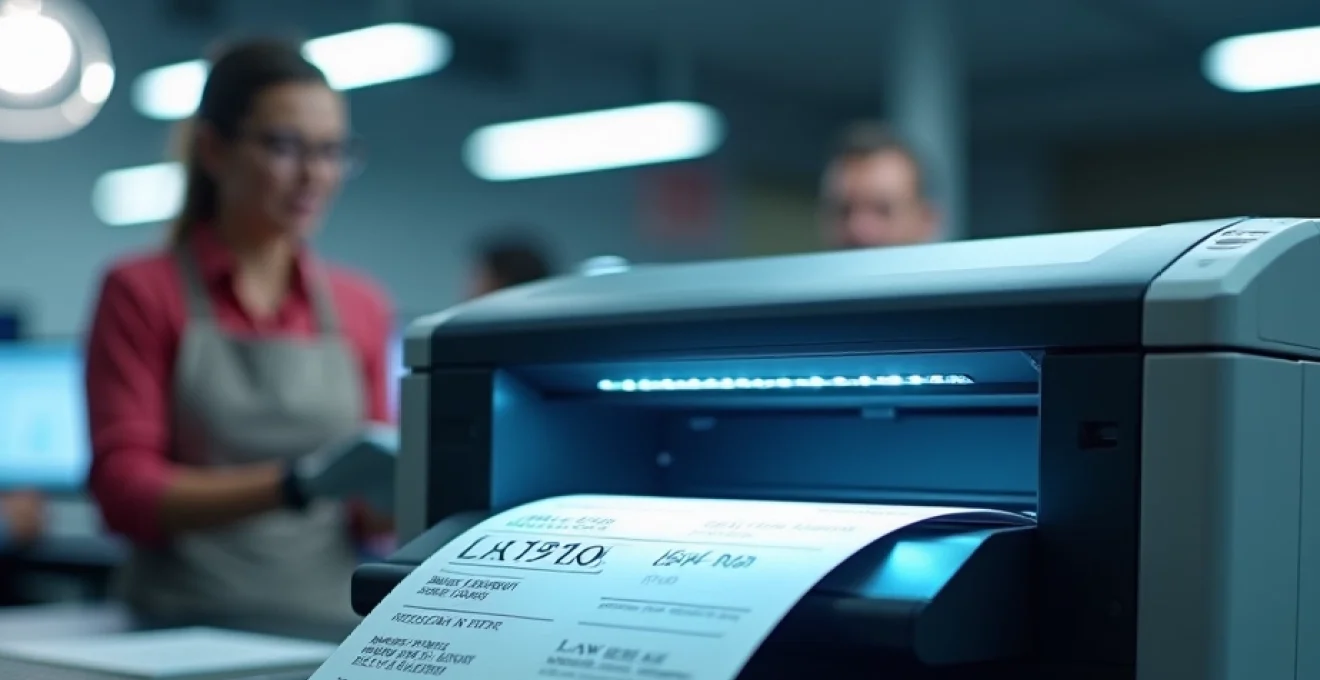
Thermal printing technology has revolutionized the way we produce receipts, labels, and various other printed materials in numerous industries. This innovative printing method relies on heat rather than ink, offering a range of benefits that have made it increasingly popular in recent years. Understanding the intricate workings of a thermal printer mechanism can provide valuable insights into its efficiency and widespread adoption across various sectors.
As we delve into the inner workings of thermal printers, we’ll explore the key components that make up these devices, the step-by-step process of thermal printing, and the advantages that have led to their prevalence in modern applications. You’ll gain a comprehensive understanding of how these printers function and why they’ve become an indispensable tool in many businesses and organizations.
Key components of a thermal printing mechanism
The effectiveness of a thermal printer lies in its carefully designed components working in harmony. Let’s examine the crucial elements that make up a thermal printer mechanism and how they contribute to the printing process.
High-precision heating print head
At the heart of every thermal printer is the high-precision heating print head. This component is responsible for generating the heat necessary to create images on thermal paper or transfer ink from a ribbon. The print head consists of numerous tiny heating elements, often referred to as thermal dots, arranged in a linear array.
These thermal dots can be individually controlled, allowing for precise heat application to specific areas of the paper or ribbon. The resolution of a thermal printer is determined by the number of these dots per inch (dpi), with higher resolutions offering sharper and more detailed prints.
Heat-sensitive paper feed roller
The heat-sensitive paper feed roller plays a crucial role in the smooth operation of a thermal printer. This component is responsible for guiding the thermal paper or ribbon through the printer at a consistent speed and tension. The roller ensures that the paper maintains proper contact with the print head, which is essential for achieving uniform print quality.
Modern thermal printers often feature advanced feed roller systems that can accommodate various paper types and thicknesses, enhancing their versatility across different applications. Some high-end models even incorporate multiple rollers to provide better control over paper movement and reduce the risk of jams or misalignments.
Paper positioning sensors
Accurate paper positioning is critical for producing high-quality prints with precise alignment. Thermal printers employ sophisticated sensors to monitor the paper’s position throughout the printing process. These sensors work in conjunction with the paper feed mechanism to ensure that each line of print is correctly placed on the paper.
Some advanced thermal printers utilize optical sensors that can detect special markings on the paper, allowing for automatic calibration and adjustment of print settings. This feature is particularly useful in applications that require printing on pre-printed forms or labels with specific layouts.
Steps in the thermal printing process
Now that we’ve examined the key components, let’s walk through the step-by-step process of how a thermal printer creates an image or text on paper. Understanding this process will give you a clearer picture of the technology’s efficiency and precision.
Transmission of print data
The thermal printing process begins when print data is transmitted from a computer or other device to the printer. This data contains information about the text, images, or barcodes that need to be printed. The printer’s internal processor interprets this data and converts it into instructions for the print head.
Modern thermal printers often feature advanced connectivity options, including Wi-Fi, Bluetooth, and USB, allowing for seamless integration with various devices and systems. This flexibility has contributed to their widespread adoption in diverse environments, from retail stores to healthcare facilities.
Selective heating of thermal dots
Once the print data has been processed, the printer’s control system activates the appropriate thermal dots on the print head. Each dot is heated individually, with the temperature and duration of heating carefully controlled to produce the desired print intensity.
In direct thermal printing, the heat causes a chemical reaction in the specially coated thermal paper, turning it black in the heated areas. For thermal transfer printing, the heat melts the ink on a ribbon, which is then transferred onto the paper or label.
The precision of this heating process is crucial for producing clear, high-quality prints. Modern thermal printers can achieve remarkable levels of detail, with some models capable of printing at resolutions of up to 600 dpi.
Synchronised paper feed
As the print head selectively heats the thermal dots, the paper feed mechanism simultaneously moves the paper or label through the printer. This synchronization is critical for ensuring that each line of print is correctly positioned and aligned.
The paper feed system must maintain consistent tension and speed to prevent distortions or gaps in the printed output. Advanced thermal printers employ sophisticated control algorithms to adjust the paper feed in real-time, compensating for variations in paper thickness or environmental conditions.
Advantages of modern thermal printers
The unique characteristics of thermal printing technology offer several advantages over traditional printing methods. These benefits have contributed to the widespread adoption of thermal printers across various industries.
High printing speed
One of the most significant advantages of thermal printers is their impressive speed. Unlike inkjet or laser printers that require complex mechanisms to deposit ink or toner onto paper, thermal printers can produce prints almost instantly.
This high-speed capability makes thermal printers ideal for applications that require rapid output, such as point-of-sale receipts or shipping labels. In busy retail environments or high-volume distribution centers, the speed of thermal printers can significantly enhance operational efficiency.
Low noise level
Thermal printers operate with minimal moving parts, resulting in exceptionally quiet operation. This low noise level is a crucial advantage in environments where noise pollution is a concern, such as healthcare facilities or quiet office spaces.
The silent operation of thermal printers also contributes to a more pleasant user experience, particularly in customer-facing applications like retail checkouts or hotel reception desks. You’ll appreciate the difference when comparing the subtle hum of a thermal printer to the clatter of a traditional dot-matrix printer.
Reduced maintenance without ink
One of the most appealing aspects of thermal printers is their low maintenance requirements. Since they don’t use ink or toner, there’s no need for frequent cartridge replacements or messy refills. This not only reduces ongoing costs but also minimizes downtime and simplifies maintenance procedures.
The absence of ink also eliminates the risk of smudging or smearing, ensuring consistently clean and legible prints. For businesses that rely on clear, scannable barcodes or crisp text on labels, this reliability is invaluable.
Thermal printers can often operate for extended periods without requiring service, making them an excellent choice for high-volume printing applications or remote locations where regular maintenance might be challenging.
Common applications of thermal printing
The versatility and efficiency of thermal printing technology have led to its adoption across a wide range of industries and applications. Here are some of the most common uses for thermal printers:
- Retail point-of-sale receipts
- Shipping and logistics labels
- Healthcare patient wristbands and specimen labels
- Ticket printing for events and transportation
- Barcode labels for inventory management
In the retail sector, thermal printers have become ubiquitous for producing receipts and price tags. Their speed and reliability make them ideal for high-volume environments, while their compact size allows for easy integration into point-of-sale systems.
The logistics and shipping industry heavily relies on thermal printers for producing shipping labels, packing slips, and tracking barcodes. The durability of thermal prints ensures that important information remains legible throughout the shipping process, even when exposed to various environmental conditions.
In healthcare settings, thermal printers play a crucial role in patient identification and sample tracking. The ability to produce clear, long-lasting prints on specialized materials like wristbands is essential for maintaining patient safety and ensuring accurate record-keeping.
Technological developments in thermal mechanisms
As with any technology, thermal printing mechanisms continue to evolve and improve. Recent developments have focused on enhancing print quality, increasing energy efficiency, and expanding the range of compatible materials.
One significant advancement is the development of near-edge print heads. These innovative components allow for more precise heat control and can produce higher-resolution prints with sharper edges. Near-edge technology has particularly benefited the printing of small text and intricate barcodes.
Energy efficiency has also been a key area of focus for thermal printer manufacturers. Modern thermal printers incorporate advanced power management systems that optimize energy consumption without compromising print speed or quality. This not only reduces operating costs but also aligns with growing environmental concerns in many industries.
Another exciting development is the expansion of compatible media types. While traditional thermal printers were limited to specific types of thermal paper, newer models can print on a wider range of materials, including synthetic papers and even some plastics. This versatility opens up new applications for thermal printing technology across various sectors.
Integration with mobile and cloud technologies is also transforming the landscape of thermal printing. Many modern thermal printers now offer wireless connectivity options, allowing for seamless printing from smartphones, tablets, or cloud-based systems. This flexibility is particularly valuable in mobile printing applications, such as on-the-spot receipt generation for delivery services or field sales.
As thermal printing technology continues to advance, we can expect to see even more innovative applications and improvements in print quality, speed, and efficiency. The ongoing evolution of thermal printer mechanisms ensures that this technology will remain a vital tool in numerous industries for years to come.