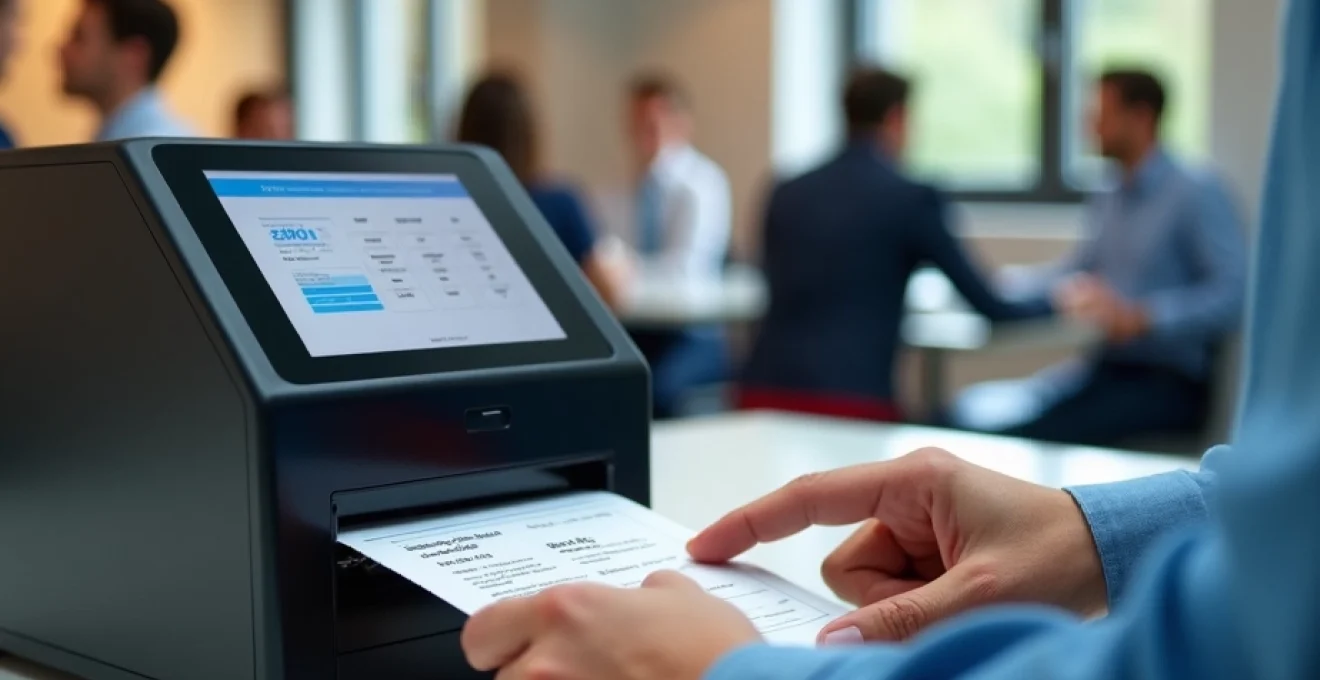
In today’s fast-paced business environment, efficient visitor management is crucial for maintaining security, streamlining operations, and creating a positive first impression. Smart ticket printers have emerged as a game-changing solution, revolutionizing the way organizations handle guest check-ins and badge creation. These innovative devices offer a blend of speed, accuracy, and customization that traditional methods simply can’t match.
By leveraging advanced technology, smart ticket printers address common pain points in visitor management, such as long wait times, manual data entry errors, and inconsistent branding. They also play a vital role in enhancing workplace safety and improving data tracking capabilities. As businesses adapt to new challenges and prioritize both efficiency and security, smart ticket printers are becoming an indispensable tool in modern reception areas.
Smart ticket printers streamline visitor check-in process
The integration of smart ticket printers into visitor management systems marks a significant leap forward in reception efficiency. These devices automate and accelerate the check-in process, transforming what was once a time-consuming task into a swift, seamless experience for both guests and staff.
Reduced wait times for improved guest experience
One of the most immediate benefits of implementing smart ticket printers is the dramatic reduction in wait times. Traditional check-in methods often involve filling out paper forms or waiting for a receptionist to manually input data. In contrast, smart printers can produce a professional-quality badge in a matter of seconds. This speed not only improves the guest experience but also prevents bottlenecks during peak hours or large events.
For example, a busy corporate office that previously struggled with long lines during morning rush hours might see wait times reduced from several minutes to less than 30 seconds per visitor. This efficiency can significantly enhance the company’s image and set a positive tone for business meetings or interviews.
Automated badge printing eliminates manual data entry
Manual data entry is not only time-consuming but also prone to errors. Smart ticket printer systems eliminate this issue by automating the badge creation process. Visitors can input their information directly into a self-service kiosk or have their details pre-registered, which then seamlessly transfers to the printer.
This automation serves multiple purposes:
- Reduces human error in transcribing visitor information
- Frees up reception staff to focus on more valuable tasks
- Ensures consistency in data collection across all visitors
- Speeds up the overall check-in process
Customizable ticket layouts for branding consistency
Smart ticket printers offer a level of customization that was previously difficult to achieve with traditional methods. Organizations can design badge layouts that perfectly align with their branding guidelines, including logos, color schemes, and specific fonts. This attention to detail reinforces brand identity and presents a polished, professional image to visitors.
Moreover, the ability to customize badges extends beyond aesthetics. Companies can include variable data such as visit duration, access levels, or specific safety instructions directly on the badge. This flexibility ensures that each visitor receives a tailored experience while maintaining security protocols.
Touchless smart printers enhance workplace safety
In the wake of global health concerns, touchless technologies have gained significant importance. Smart ticket printers are at the forefront of this trend, offering contactless check-in options that minimize physical interactions and reduce the risk of transmission of infectious diseases.
Many modern smart printers incorporate features such as:
- QR code scanning for contactless check-in
- Voice-activated commands for hands-free operation
- Proximity sensors for automatic badge dispensing
These touchless features not only enhance safety but also demonstrate an organization’s commitment to the well-being of its visitors and staff. As health and safety continue to be paramount concerns, the adoption of such technologies can provide peace of mind and help maintain business continuity in challenging times.
“The implementation of touchless smart printers has become a critical component in our comprehensive safety strategy, significantly reducing surface contact points in high-traffic areas.”
Integrated smart printers improve visitor data tracking
Beyond the immediate benefits of efficient check-ins and enhanced safety, smart ticket printers offer powerful data tracking capabilities that can provide valuable insights for organizations.
Real-time synchronization with visitor management software
Smart printers don’t operate in isolation; they’re typically part of a broader visitor management ecosystem. These printers can synchronize in real-time with central management software, ensuring that visitor data is instantly available across the organization. This integration allows for:
- Immediate visibility of who is on-premises at any given time
- Automated alerts to hosts when their visitors arrive
- Quick access to historical visit data for compliance or security purposes
The seamless flow of information between the printer and the management software creates a cohesive system that enhances both operational efficiency and security measures.
Consolidated visitor analytics for informed decisions
With smart ticket printers, every visitor interaction generates data that can be analyzed to inform business decisions. Organizations can track patterns in visitor traffic, peak hours, frequent visitors, and more. This wealth of information can be used to optimize staffing levels, improve facility management, and enhance the overall visitor experience.
For instance, a company might discover that Wednesdays consistently have the highest visitor traffic. Armed with this knowledge, they can ensure adequate staffing and resources are available on those days to maintain smooth operations.
Secure data storage protects visitor privacy
As organizations collect more visitor data, the importance of secure storage becomes paramount. Smart ticket printers are designed with data protection in mind, often incorporating encryption and secure storage protocols. This ensures compliance with data protection regulations such as GDPR and helps maintain visitor trust.
Many systems allow for customizable data retention policies, automatically purging visitor information after a specified period. This feature helps organizations balance the need for historical data with the responsibility to protect individual privacy.
Versatile smart printers adapt to diverse environments
The versatility of smart ticket printers makes them suitable for a wide range of environments, from corporate offices to educational institutions and healthcare facilities. Their adaptability is a key factor in their growing popularity across various sectors.
Compact designs suitable for various reception areas
Modern smart printers are designed with space efficiency in mind. Their compact footprint allows them to fit comfortably in various reception setups, from spacious lobbies to small front desks. This flexibility in placement ensures that organizations can implement smart printing solutions without significant modifications to their existing layout.
Some printers even offer modular designs, allowing for easy expansion or reconfiguration as needs change. This adaptability ensures that the investment in smart printing technology remains valuable even as an organization grows or evolves.
Durable construction withstands high-volume usage
In high-traffic environments, durability is a critical factor. Smart ticket printers are built to withstand continuous use, with many models capable of printing thousands of badges per day without degradation in quality. This robust construction ensures reliability and minimizes downtime, which is crucial for maintaining smooth operations in busy reception areas.
Wireless connectivity options for flexible placement
The advent of wireless connectivity in smart printers has further enhanced their versatility. Wi-Fi and Bluetooth capabilities allow for flexible placement without the need for extensive cabling. This wireless freedom enables organizations to:
- Set up temporary check-in points for special events
- Easily relocate printers as office layouts change
- Integrate printers with mobile check-in solutions for ultimate flexibility
These connectivity options not only simplify installation but also future-proof the investment, allowing for easy integration with emerging technologies and visitor management trends.
Cost-effective smart printers deliver long-term value
While the initial investment in smart ticket printers may be higher than traditional methods, the long-term value they provide often results in significant cost savings. Organizations need to consider the total cost of ownership, which includes factors beyond the purchase price.
Smart printers contribute to cost-effectiveness through:
- Reduced labor costs by automating manual processes
- Minimized consumable waste with on-demand printing
- Decreased security risks and associated costs
- Improved operational efficiency leading to time savings
Moreover, the data insights provided by these systems can lead to more informed decision-making, potentially uncovering additional areas for cost optimization across the organization.
As businesses continue to prioritize efficiency, security, and visitor experience, smart ticket printers stand out as a technology that delivers tangible benefits across multiple fronts. From streamlining check-ins to enhancing data management and adapting to diverse environments, these devices offer a comprehensive solution to modern visitor management challenges.
The integration of smart ticket printers into visitor management systems represents more than just a technological upgrade; it’s a strategic investment in operational excellence and guest satisfaction. As organizations look to the future, those who embrace these innovative solutions will likely find themselves better equipped to meet the evolving demands of visitor management in an increasingly digital world.